

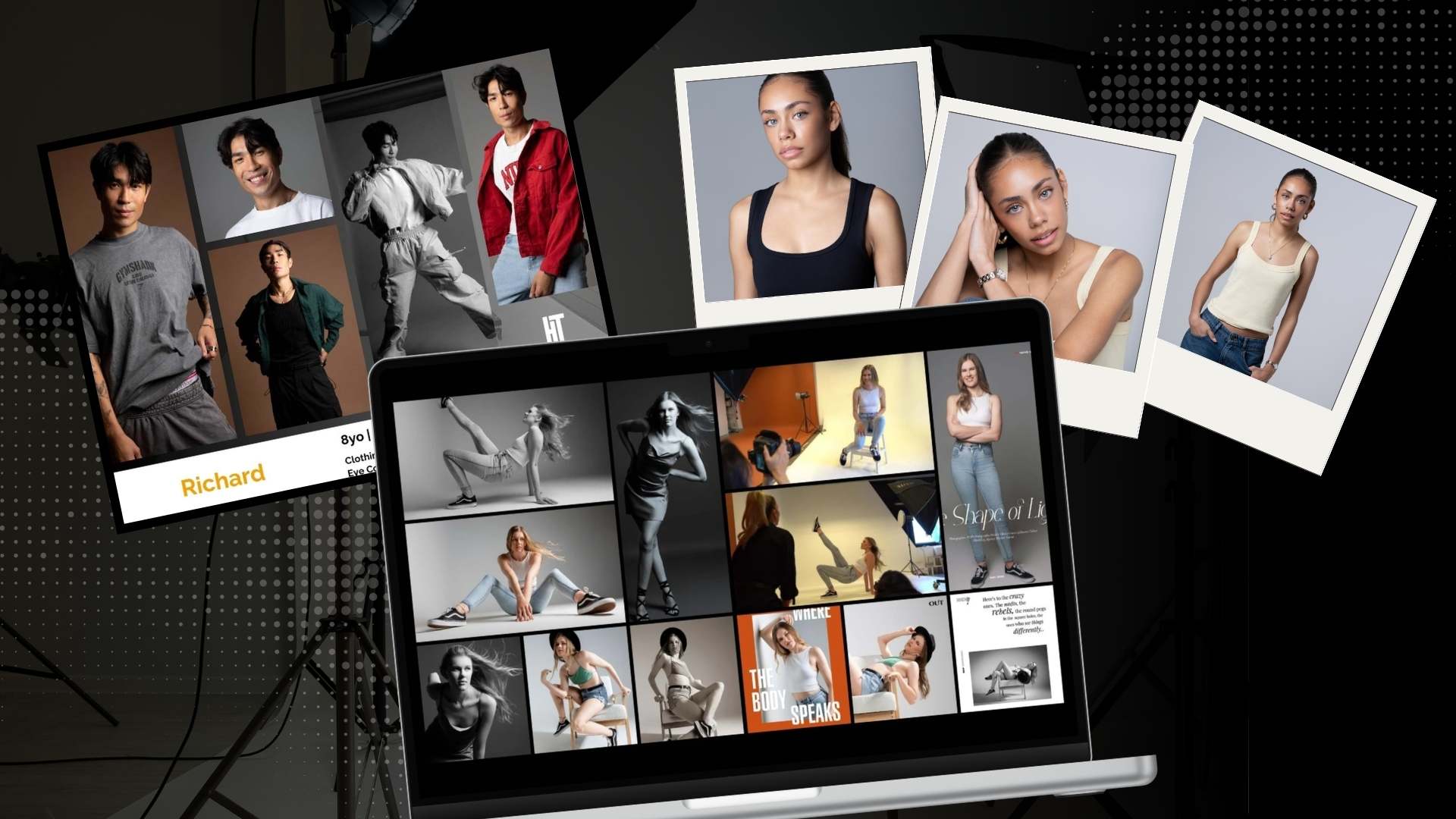

Three terms, three different jobs. If we’re being honest, most beginners assume these are interchangeable — they’re not, and mixing them up can actually cost you castings.
Comp card
A comp card (short for composite card) is a printed or digital single sheet, usually one main photo on the front and three to four smaller images on the back, alongside your key stats — height, measurements, shoe size, hair and eye colour, and agency contact details.
What it’s for: Quick reference. Casting directors and clients flip through dozens of these in a single sitting — a comp card exists to be scanned in seconds, not studied.
What it should show: Your range, not your favourites. One clean headshot, then a spread that shows you can convincingly cover different looks — commercial, editorial, lifestyle — rather than four versions of the same expression.
Portfolio
A portfolio (sometimes called a folio) is a fuller, curated collection of your best work — usually 10 to 20 images across tearsheets, test shoots, and campaign work, often presented as a physical book or a PDF/online gallery.
What it’s for: Depth. This is what a client looks at when they want to understand your range, consistency, and the calibre of work you’ve already done — not a quick scan, but genuine consideration.
What it should show: Your strongest, most varied, most recent work. Quality over quantity always wins here — a folio with 12 excellent images beats one with 25 mediocre ones.
Digitals
Digitals are simple, unretouched, often self-shot or agency-shot photos — usually a front, side, and back shot in neutral clothing, with minimal makeup, natural light, and no styling.
What it’s for: Honesty. Digitals exist so a client can see exactly what you look like right now, without lighting, angles, or retouching doing any of the work. Many castings specifically request digitals over polished images for this reason.
What it should show: You, accurately. No filters, no dramatic posing — just a genuine, current representation of your look and body.
Why the distinction actually matters
Sending a polished, retouched portfolio shot when a client asked for digitals can actually work against you — it looks like you’re hiding what you really look like, which is the opposite impression you want to give. Equally, submitting only digitals when a client wants to see your range and experience won’t showcase what a comp card or portfolio would.
Quick reference
Length: 1 page, 4–5 images.
Style: polished, range-focused.
Length: 10–20 images. Style: curated,
best work only.
Length: 3–4 images.
Style: unretouched, natural.
The bottom line
Each of these three assets is doing a different job in the casting process. Knowing when to use which one — and keeping all three current — is a simple, practical way to avoid an easily avoidable mistake that has nothing to do with your talent.
Frequently Asked Questions
Do I need all three as a beginner model?
Eventually, yes — but digitals and a basic comp card are the priority when you’re starting out. A full portfolio builds naturally as you book more work.
Can I use the same photos for my comp card and portfolio?
You can reuse strong images, but the comp card should prioritise range and quick scanning, while the portfolio can go deeper into your best individual shoots.
Why would a client ask specifically for digitals instead of my portfolio?
Because they want to see exactly what you look like without styling, lighting, or retouching influencing the decision.
How often should I update these?
Digitals should reflect your current look at all times. Comp cards and portfolios are worth refreshing every time you have strong new work to add.
Hunter Talent helps talent build and maintain the right materials for every stage of their career.
Get in touch if you’re not sure what you actually need yet.