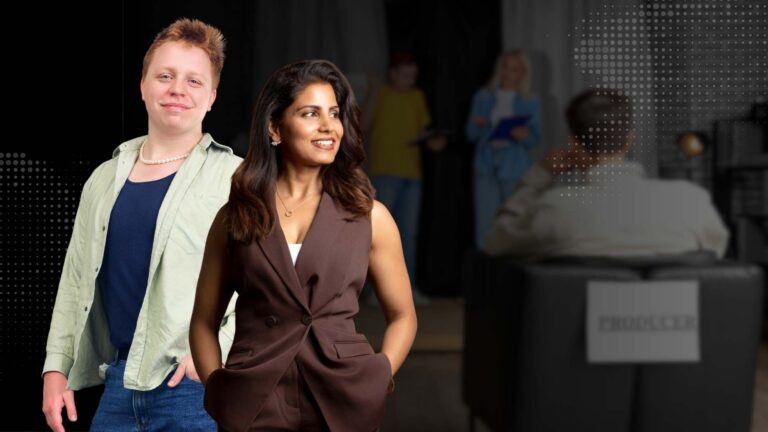


If you’ve ever refreshed your Instagram DMs hoping to see a message from a modelling agency, you’re not alone. Instagram has quietly become one of the most active scouting grounds for Australian talent agencies, and at Hunter Talent we spend more hours than we’d care to admit scrolling through profiles, saving accounts, and tracking rising talent before anyone else notices them.
But here’s the honest truth most “how to get scouted” articles won’t tell you: the people writing them usually aren’t the ones doing the scouting. This guide is different. It’s written from inside a working Australian agency, based on the actual signings we’ve made from Instagram over the last three years. No fluff, no recycled advice, no vague promises about “being authentic.” Just the exact blueprint that gets real scouts to slide into real DMs.
Let’s get into it.
Do Agencies Really Scout on Instagram?
Yes, and the numbers might surprise you. Roughly 38% of Hunter Talent’s current roster was first discovered through Instagram before any formal application was ever submitted. That’s almost four in every ten signed models. A decade ago, scouts were camped outside shopping centres and music festivals. Today, they’re scrolling through geo-tagged posts in Bondi, Brunswick, and Fortitude Valley from their phones at 9pm on a Tuesday.
Every major Australian agency now has at least one scout whose job description explicitly includes “social discovery.” At Hunter Talent, our bookings team reviews hundreds of profiles each week, flagged through a combination of hashtag monitoring, location tags, and engagement signals. Some of our most successful commercial and UGC talent never submitted an application at all — we found them first, reached out, and invited them to apply through our application form after the initial conversation.
So if anyone tells you Instagram scouting is a myth, they’re working with outdated information. It’s more competitive than ever, but the doors are wide open for talent who know how to present themselves.

What Do Agency Scouts Look For on Instagram?
Here’s where most advice goes wrong. Scouts aren’t looking for follower counts. We repeat: follower counts are not the metric. In fact, we’ve signed talent with under 500 followers and passed on accounts with 100,000+. What matters is a specific cluster of signals that tell us you’re castable, professional, and ready to work.
The three things we look for first:
1. A clear, consistent look. When we land on your profile, we should understand within five seconds who you are, what your vibe is, and what kind of campaigns you’d fit. That doesn’t mean every photo has to look the same — it means your face, your styling, and your presence should feel coherent across the grid.
2. Natural-light photography that shows your real features. We want to see you without heavy filters, without extreme angles, and without full beat makeup in every frame. A scout needs to assess bone structure, skin quality, proportions, and posture. If your entire feed is filtered into oblivion, we can’t actually see you, and we’ll move on.
3. Engagement quality over quantity. A 2,000-follower account with genuine comments and a 6% engagement rate is infinitely more valuable to us than a 50,000-follower account running follow-unfollow tactics with bot comments underneath. Brands now audit this obsessively, which means we have to as well. Engagement rate has become the single most important number on your profile — more important than followers, full stop.
Beyond those three, we also check for location (are you based somewhere we cast frequently?), age-appropriate content, consistency of posting, and whether you seem to actually enjoy being on camera or look like you’re suffering through it.
How Should You Set Up Your Instagram Profile?
Your profile is your digital comp card. Treat it with the same seriousness a booked model treats their portfolio. A scout will make a yes-or-no decision on whether to follow, save, or DM you within about eight seconds of landing on your grid. That decision is made on three elements: your profile photo, your bio, and your first nine posts.
Your profile photo should be a clean, front-facing headshot. No sunglasses, no group photos, no pet cameos, no holiday snap from three years ago. Natural light, minimal makeup, hair out of your face.
Your bio should tell us immediately what city you’re in and how to contact you. We recommend this format: your name, your city, a one-line descriptor, and an email. Example: “Amelia | Sydney | Commercial & lifestyle | bookings@yourname.com”. If you don’t want a public email, at minimum list your location. You’d be shocked how many potentially bookable profiles we skip because we cannot figure out whether they’re in Melbourne or Manchester.
Your first nine posts — the ones visible before a scout has to scroll — should function as a mini portfolio. Ideally: one clean beauty shot, one full-body, one lifestyle/candid, one editorial-style, one environmental, and the rest rounding out your personality. Avoid meme reposts, screenshots, and anything that isn’t either you or clearly adjacent to your personal brand within that top grid.
Switch to a professional account so brands and agencies can see your insights. It’s free, takes thirty seconds, and unlocks the analytics we actively check when vetting talent.
What Hashtags Help You Get Discovered?
Hashtags still work in 2026, but not the way most people use them. Throwing #model #modellife #instafashion on every post is the Instagram equivalent of shouting into a void. Those tags are saturated with millions of posts and scouts don’t search them.
What we actually search:
The sweet spot is five to eight relevant, specific hashtags per post. Mix one or two broader ones with several niche ones. Put them in your caption or the first comment — Instagram’s algorithm treats both equivalently in 2026. Avoid anything that looks spammy or unrelated to your actual content, because shadowbanning is still very real and will destroy your reach overnight.
If you’re creating content specifically for brands as a UGC creator, also use #ugcaustralia, #ugccommunity, and brand-specific tags for products you genuinely love. Scouts looking for UGC talent search these religiously.
Should You Tag Agencies in Your Posts?
Yes, but strategically. Tagging an agency in every single post is considered spam and will get you muted faster than you can say “new faces.” Tagging agencies with intention, however, is one of the most underused tools available.
Here’s how to do it properly. Tag an agency you’d genuinely love to sign with when you post a photo that specifically represents the kind of work they book. If Hunter Talent frequently places commercial talent for lifestyle campaigns, tagging us in a polished lifestyle shot makes sense. Tagging us in a bathroom mirror selfie does not.
Limit agency tags to roughly one in every five or six posts. Tag in the photo itself rather than cramming the caption with handles. And never tag more than two agencies in a single post — it looks desperate and signals that you’re spraying rather than genuinely interested in any one of them.
The other move that works: tag professional photographers you’ve shot with. Credit them in the caption and in the photo tag. Good photographers often have relationships with agencies, and a quality tag from them adds credibility. If you’re in Sydney and looking to build out your portfolio before putting yourself in front of scouts, POP Photography is the team we recommend for clean, castable portfolio work — their shoots consistently produce the kind of imagery that converts on Instagram and translates directly to agency interest.
What Mistakes Turn Off Scouts?
Let’s talk about what gets a profile instantly passed over. These are the real deal-breakers we see every week at Hunter Talent, ranked by how often they cost aspiring talent a signing:

Heavy filters and over-editing. We cannot stress this enough. Filters that reshape your face, smooth your skin into plastic, or change your eye colour make it impossible for us to assess you. We’ve literally had talent show up to meetings looking nothing like their profile, and the meeting ends there.
Inconsistent aesthetics. A grid that jumps from editorial black-and-white to low-res nightclub photos to mirror selfies to food pics tells us you haven’t thought seriously about presenting yourself. You don’t need a rigid theme, but you do need coherence.
Bot followers and engagement pods. Brands now run audits on influencer and model accounts before booking. A single brand audit that flags purchased followers will nuke your prospects for years. It’s not worth it. Ever.
Controversial or unprofessional content. Political rants, public feuds, excessive partying, and trash-talking other talent all signal to us that you’d be a nightmare to manage on set. Agencies take reputational risk seriously, and we will simply move on.
No clear way to contact you. If your DMs are closed, your email is hidden, and your location is unlisted, you’ve made it impossible for us to reach you. We’re not going to solve a puzzle to book you when there are thousands of other profiles we could look at instead.
Chasing trends at the expense of your own look. Trying to look like whoever’s on the explore page this week makes you forgettable. Scouts are looking for someone who stands out, not someone who blends into the current aesthetic wave.
How to Optimise Your Instagram to Get Scouted by Agencies
Here’s the step-by-step playbook we give to anyone serious about getting discovered.
1. Audit Your Current Profile Through a Scout’s Eyes
Open your profile in an incognito window so you see exactly what we see. Look at your top nine posts. Ask yourself: can a stranger tell my age range, my city, and what kind of work I’d fit in under ten seconds? If not, you’ve already lost the scout. Screenshot it, be brutally honest, and make a list of what needs fixing.
2. Rewrite Your Bio for Clarity
Use the format: Name | City | Category | Contact. Strip out quotes, emojis that aren’t functional, and anything vague. Your bio is not the place to be poetic. It’s the place to make a scout’s job easy. If your profile is public and contact-friendly, you’ve immediately moved ahead of 70% of other aspiring talent.
3. Curate Your Top Nine Posts
Archive everything that isn’t working. Archiving hides posts from public view without deleting them, so you can bring them back later if you change your mind. Keep only the images that look castable, on-brand, and recent. If your grid is thin after archiving, that’s a signal you need to shoot new content — which brings us to the next step.
4. Invest in One Proper Shoot
You don’t need ten test shoots. You need one quality shoot that gives you six to twelve castable images across beauty, lifestyle, and full-body looks. This single investment changes everything. Work with a photographer who shoots specifically for agency portfolios — again, POP Photography is our go-to recommendation in Sydney because they understand exactly what scouts want to see. One shoot like this will outperform fifty iPhone selfies.
5. Post Consistently Without Burning Out
Three to four feed posts per week, plus stories most days. Mix your curated shoot content with behind-the-scenes, day-in-the-life, and personality posts. The algorithm rewards accounts that post in bursts more than accounts that post once a fortnight. Consistency builds momentum and keeps you in the recommendation engine.
6. Engage Genuinely Within Your Niche
Leave thoughtful comments on photographers’ work, other talent’s posts, and brands you love. This isn’t engagement farming — it’s community building, and scouts actually notice who shows up in the comment sections of accounts we follow. We’ve signed talent specifically because we kept seeing their name pop up under photographers we already worked with.
7. Submit Alongside Your Organic Efforts
Don’t just wait to be scouted. Apply directly. It’s genuinely the fastest path in, and combining an active Instagram presence with a formal application gives you two lanes of opportunity instead of one. Head to become a model to learn how Hunter Talent’s signing process works, then submit through our application form.
Frequently Asked Questions
How many followers do I need to get scouted by an agency?
None. Seriously. We regularly sign talent with fewer than 1,000 followers. Agencies prioritise look, professionalism, engagement quality, and castability far above raw follower count. If anything, an authentic small account with strong engagement is often more attractive than a large account with suspicious metrics.
Is engagement rate more important than follower count?
Absolutely yes. Engagement rate is the single most important social metric in 2026. Brands audit it, agencies track it, and a strong engagement rate tells us your audience is real and responsive. Aim for at least 3% engagement. Above 5% is excellent. Above 8% is rare and highly valuable.
Should I follow and DM agencies directly?
Following agencies is fine and encouraged — it helps you understand their roster and the kind of work they book. DMing agencies cold with application requests is less effective than going through their official submission process. Most agencies, including Hunter Talent, route scouting and submissions through formal channels for a reason: it keeps the process fair and organised.
Can I get scouted if I'm under 18?
Yes, but with conditions. Hunter Talent works exclusively with adult talent, so for under-18s we’d suggest exploring child and youth agencies. If you’re 18 or over, you can apply immediately. Either way, your Instagram should always reflect age-appropriate content and your real age.
Do I need professional photos or can I use iPhone shots?
You can absolutely get scouted with quality iPhone photos — we’ve done it many times. However, at least a handful of professional images will significantly raise your perceived professionalism and castability. Think of one good shoot as a career investment that pays off across every audition and submission.
How long does it take to get scouted once I've optimised my profile?
There’s no guaranteed timeline — it could be a week, it could be six months. What we can tell you is that the talent who actively post, use the right hashtags, build genuine engagement, and also submit formal applications get noticed dramatically faster than those waiting passively. Combine organic growth with a direct application and you’ll shorten the timeline enormously.
Ready to Be Discovered?
Instagram scouting in 2026 isn’t a lottery. It’s a system, and now you know exactly how it works from the inside. Optimise your profile, shoot content that makes a scout’s job easy, engage genuinely within your niche, and don’t leave your signing up to chance.
If you’re ready to stop waiting to be found, head straight to our application form and submit. Our bookings team reviews every single application, and we’d rather hear from you now than scroll past you later.
Related Reading
If you’ve ever refreshed your Instagram DMs hoping to see a message from a modelling agency, you’re not alone. Instagram has quietly become one of the most active scouting grounds for Australian talent agencies, and at Hunter Talent we spend more hours than we’d care to admit scrolling through profiles, saving accounts, and tracking rising talent before anyone else notices them.
But here’s the honest truth most “how to get scouted” articles won’t tell you: the people writing them usually aren’t the ones doing the scouting. This guide is different. It’s written from inside a working Australian agency, based on the actual signings we’ve made from Instagram over the last three years. No fluff, no recycled advice, no vague promises about “being authentic.” Just the exact blueprint that gets real scouts to slide into real DMs.
Let’s get into it.
Do Agencies Really Scout on Instagram?
Yes, and the numbers might surprise you. Roughly 38% of Hunter Talent’s current roster was first discovered through Instagram before any formal application was ever submitted. That’s almost four in every ten signed models. A decade ago, scouts were camped outside shopping centres and music festivals. Today, they’re scrolling through geo-tagged posts in Bondi, Brunswick, and Fortitude Valley from their phones at 9pm on a Tuesday.
Every major Australian agency now has at least one scout whose job description explicitly includes “social discovery.” At Hunter Talent, our bookings team reviews hundreds of profiles each week, flagged through a combination of hashtag monitoring, location tags, and engagement signals. Some of our most successful commercial and UGC talent never submitted an application at all — we found them first, reached out, and invited them to apply through our application form after the initial conversation.
So if anyone tells you Instagram scouting is a myth, they’re working with outdated information. It’s more competitive than ever, but the doors are wide open for talent who know how to present themselves.
What Do Agency Scouts Look For on Instagram?
Here’s where most advice goes wrong. Scouts aren’t looking for follower counts. We repeat: follower counts are not the metric. In fact, we’ve signed talent with under 500 followers and passed on accounts with 100,000+. What matters is a specific cluster of signals that tell us you’re castable, professional, and ready to work.
The three things we look for first:
1. A clear, consistent look. When we land on your profile, we should understand within five seconds who you are, what your vibe is, and what kind of campaigns you’d fit. That doesn’t mean every photo has to look the same — it means your face, your styling, and your presence should feel coherent across the grid.
2. Natural-light photography that shows your real features. We want to see you without heavy filters, without extreme angles, and without full beat makeup in every frame. A scout needs to assess bone structure, skin quality, proportions, and posture. If your entire feed is filtered into oblivion, we can’t actually see you, and we’ll move on.
3. Engagement quality over quantity. A 2,000-follower account with genuine comments and a 6% engagement rate is infinitely more valuable to us than a 50,000-follower account running follow-unfollow tactics with bot comments underneath. Brands now audit this obsessively, which means we have to as well. Engagement rate has become the single most important number on your profile — more important than followers, full stop.
Beyond those three, we also check for location (are you based somewhere we cast frequently?), age-appropriate content, consistency of posting, and whether you seem to actually enjoy being on camera or look like you’re suffering through it.
How Should You Set Up Your Instagram Profile?
Your profile is your digital comp card. Treat it with the same seriousness a booked model treats their portfolio. A scout will make a yes-or-no decision on whether to follow, save, or DM you within about eight seconds of landing on your grid. That decision is made on three elements: your profile photo, your bio, and your first nine posts.
Your profile photo should be a clean, front-facing headshot. No sunglasses, no group photos, no pet cameos, no holiday snap from three years ago. Natural light, minimal makeup, hair out of your face.
Your bio should tell us immediately what city you’re in and how to contact you. We recommend this format: your name, your city, a one-line descriptor, and an email. Example: “Amelia | Sydney | Commercial & lifestyle | bookings@yourname.com”. If you don’t want a public email, at minimum list your location. You’d be shocked how many potentially bookable profiles we skip because we cannot figure out whether they’re in Melbourne or Manchester.
Your first nine posts — the ones visible before a scout has to scroll — should function as a mini portfolio. Ideally: one clean beauty shot, one full-body, one lifestyle/candid, one editorial-style, one environmental, and the rest rounding out your personality. Avoid meme reposts, screenshots, and anything that isn’t either you or clearly adjacent to your personal brand within that top grid.
Switch to a professional account so brands and agencies can see your insights. It’s free, takes thirty seconds, and unlocks the analytics we actively check when vetting talent.
What Hashtags Help You Get Discovered?
Hashtags still work in 2026, but not the way most people use them. Throwing #model #modellife #instafashion on every post is the Instagram equivalent of shouting into a void. Those tags are saturated with millions of posts and scouts don’t search them.
What we actually search:
- City-specific scouting tags: #sydneymodel #melbournemodel #brisbanemodel #perthmodel #goldcoastmodel
- Agency-adjacent tags: #australianmodel #aussiemodel #newfaces #scoutingaustralia
- Niche category tags: #commercialmodel #lifestylemodel #fitnessmodel #ugcaustralia #ugccreator
- Industry hashtags casting directors monitor: #castingcall #castingaustralia #talentagencyaustralia
The sweet spot is five to eight relevant, specific hashtags per post. Mix one or two broader ones with several niche ones. Put them in your caption or the first comment — Instagram’s algorithm treats both equivalently in 2026. Avoid anything that looks spammy or unrelated to your actual content, because shadowbanning is still very real and will destroy your reach overnight.
If you’re creating content specifically for brands as a UGC creator, also use #ugcaustralia, #ugccommunity, and brand-specific tags for products you genuinely love. Scouts looking for UGC talent search these religiously.
Should You Tag Agencies in Your Posts?
Yes, but strategically. Tagging an agency in every single post is considered spam and will get you muted faster than you can say “new faces.” Tagging agencies with intention, however, is one of the most underused tools available.
Here’s how to do it properly. Tag an agency you’d genuinely love to sign with when you post a photo that specifically represents the kind of work they book. If Hunter Talent frequently places commercial talent for lifestyle campaigns, tagging us in a polished lifestyle shot makes sense. Tagging us in a bathroom mirror selfie does not.
Limit agency tags to roughly one in every five or six posts. Tag in the photo itself rather than cramming the caption with handles. And never tag more than two agencies in a single post — it looks desperate and signals that you’re spraying rather than genuinely interested in any one of them.
The other move that works: tag professional photographers you’ve shot with. Credit them in the caption and in the photo tag. Good photographers often have relationships with agencies, and a quality tag from them adds credibility. If you’re in Sydney and looking to build out your portfolio before putting yourself in front of scouts, POP Photography is the team we recommend for clean, castable portfolio work — their shoots consistently produce the kind of imagery that converts on Instagram and translates directly to agency interest.
What Mistakes Turn Off Scouts?
Let’s talk about what gets a profile instantly passed over. These are the real deal-breakers we see every week at Hunter Talent, ranked by how often they cost aspiring talent a signing:
Heavy filters and over-editing. We cannot stress this enough. Filters that reshape your face, smooth your skin into plastic, or change your eye colour make it impossible for us to assess you. We’ve literally had talent show up to meetings looking nothing like their profile, and the meeting ends there.
Inconsistent aesthetics. A grid that jumps from editorial black-and-white to low-res nightclub photos to mirror selfies to food pics tells us you haven’t thought seriously about presenting yourself. You don’t need a rigid theme, but you do need coherence.
Bot followers and engagement pods. Brands now run audits on influencer and model accounts before booking. A single brand audit that flags purchased followers will nuke your prospects for years. It’s not worth it. Ever.
Controversial or unprofessional content. Political rants, public feuds, excessive partying, and trash-talking other talent all signal to us that you’d be a nightmare to manage on set. Agencies take reputational risk seriously, and we will simply move on.
No clear way to contact you. If your DMs are closed, your email is hidden, and your location is unlisted, you’ve made it impossible for us to reach you. We’re not going to solve a puzzle to book you when there are thousands of other profiles we could look at instead.
Chasing trends at the expense of your own look. Trying to look like whoever’s on the explore page this week makes you forgettable. Scouts are looking for someone who stands out, not someone who blends into the current aesthetic wave.
How to Optimise Your Instagram to Get Scouted by Agencies
Here’s the step-by-step playbook we give to anyone serious about getting discovered.
1. Audit Your Current Profile Through a Scout’s Eyes
Open your profile in an incognito window so you see exactly what we see. Look at your top nine posts. Ask yourself: can a stranger tell my age range, my city, and what kind of work I’d fit in under ten seconds? If not, you’ve already lost the scout. Screenshot it, be brutally honest, and make a list of what needs fixing.
2. Rewrite Your Bio for Clarity
Use the format: Name | City | Category | Contact. Strip out quotes, emojis that aren’t functional, and anything vague. Your bio is not the place to be poetic. It’s the place to make a scout’s job easy. If your profile is public and contact-friendly, you’ve immediately moved ahead of 70% of other aspiring talent.
3. Curate Your Top Nine Posts
Archive everything that isn’t working. Archiving hides posts from public view without deleting them, so you can bring them back later if you change your mind. Keep only the images that look castable, on-brand, and recent. If your grid is thin after archiving, that’s a signal you need to shoot new content — which brings us to the next step.
4. Invest in One Proper Shoot
You don’t need ten test shoots. You need one quality shoot that gives you six to twelve castable images across beauty, lifestyle, and full-body looks. This single investment changes everything. Work with a photographer who shoots specifically for agency portfolios — again, POP Photography is our go-to recommendation in Sydney because they understand exactly what scouts want to see. One shoot like this will outperform fifty iPhone selfies.
5. Post Consistently Without Burning Out
Three to four feed posts per week, plus stories most days. Mix your curated shoot content with behind-the-scenes, day-in-the-life, and personality posts. The algorithm rewards accounts that post in bursts more than accounts that post once a fortnight. Consistency builds momentum and keeps you in the recommendation engine.
6. Engage Genuinely Within Your Niche
Leave thoughtful comments on photographers’ work, other talent’s posts, and brands you love. This isn’t engagement farming — it’s community building, and scouts actually notice who shows up in the comment sections of accounts we follow. We’ve signed talent specifically because we kept seeing their name pop up under photographers we already worked with.
7. Submit Alongside Your Organic Efforts
Don’t just wait to be scouted. Apply directly. It’s genuinely the fastest path in, and combining an active Instagram presence with a formal application gives you two lanes of opportunity instead of one. Head to become a model to learn how Hunter Talent’s signing process works, then submit through our application form.
Frequently Asked Questions
How many followers do I need to get scouted by an agency?
None. Seriously. We regularly sign talent with fewer than 1,000 followers. Agencies prioritise look, professionalism, engagement quality, and castability far above raw follower count. If anything, an authentic small account with strong engagement is often more attractive than a large account with suspicious metrics.
Is engagement rate more important than follower count?
Absolutely yes. Engagement rate is the single most important social metric in 2026. Brands audit it, agencies track it, and a strong engagement rate tells us your audience is real and responsive. Aim for at least 3% engagement. Above 5% is excellent. Above 8% is rare and highly valuable.
Should I follow and DM agencies directly?
Following agencies is fine and encouraged — it helps you understand their roster and the kind of work they book. DMing agencies cold with application requests is less effective than going through their official submission process. Most agencies, including Hunter Talent, route scouting and submissions through formal channels for a reason: it keeps the process fair and organised.
Can I get scouted if I’m under 18?
Yes, but with conditions. Hunter Talent works exclusively with adult talent, so for under-18s we’d suggest exploring child and youth agencies. If you’re 18 or over, you can apply immediately. Either way, your Instagram should always reflect age-appropriate content and your real age.
Do I need professional photos or can I use iPhone shots?
You can absolutely get scouted with quality iPhone photos — we’ve done it many times. However, at least a handful of professional images will significantly raise your perceived professionalism and castability. Think of one good shoot as a career investment that pays off across every audition and submission.
How long does it take to get scouted once I’ve optimised my profile?
There’s no guaranteed timeline — it could be a week, it could be six months. What we can tell you is that the talent who actively post, use the right hashtags, build genuine engagement, and also submit formal applications get noticed dramatically faster than those waiting passively. Combine organic growth with a direct application and you’ll shorten the timeline enormously.
Ready to Be Discovered?
Instagram scouting in 2026 isn’t a lottery. It’s a system, and now you know exactly how it works from the inside. Optimise your profile, shoot content that makes a scout’s job easy, engage genuinely within your niche, and don’t leave your signing up to chance.
If you’re ready to stop waiting to be found, head straight to our application form and submit. Our bookings team reviews every single application, and we’d rather hear from you now than scroll past you later.