

Let’s clear something up right at the start: the idea that you need to be 5’9″ or taller to work as a model in Australia is one of the most persistent myths in the industry. It’s a myth that has stopped thousands of talented, marketable people from ever sending in an application, and frankly, it’s costing them real money and real opportunities.
At Hunter Talent, we’ve been placing adult talent into paid campaigns across Australia for years, and here’s what the data on our own books tells us: the majority of the work we book has nothing to do with runway measurements. Commercial campaigns, e-commerce shoots, lifestyle content, branded video, parts modelling, real-people casting — these briefs land in our inbox every week, and the height requirement on most of them reads “any” or simply isn’t listed at all.
If you’ve been told you’re “too short” to model, this guide is for you. We’re going to walk through exactly which short model jobs Australia has on offer, which brands actively cast shorter models, what you can realistically expect to earn, and how to take your first step. No sugar-coating, no gatekeeping — just the honest inside view from an agency that books this work every day.
Do You Really Need to Be Tall to Model?
The short answer is no. The longer answer is that height has only ever mattered for one narrow slice of the industry: high fashion runway and editorial print. That’s it. Everything else — and “everything else” is roughly 85% of the paid modelling work available in Australia — is cast on a different set of criteria entirely.
Fashion runway exists for a specific reason. Designers historically cut sample garments to a standardised size so that clothing hangs a certain way on the catwalk. Agencies built their books around those sample sizes, and over decades the 5’9″–6’0″ range became the industry shorthand for “fashion model.” That’s a tradition, not a rule of nature, and it only applies when the client is specifically booking for that kind of work.
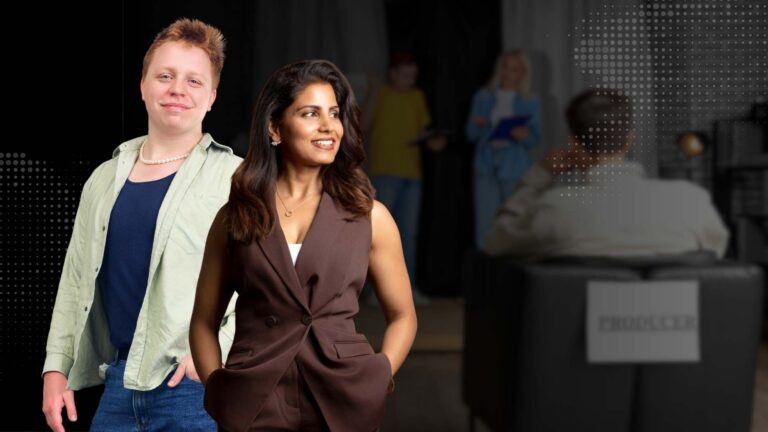
*Anamika’s height is 158cm.

Commercial clients — the supermarkets, banks, telcos, healthcare brands, travel companies, online retailers, and lifestyle brands who make up the bulk of Australian advertising spend — aren’t working with sample garments. They’re selling products to everyday Australians, and they want the models in their campaigns to look like everyday Australians. The average Australian woman is about 5’4″. The average Australian man is about 5’9″. If every commercial model were 5’11”, the campaigns wouldn’t connect with the people buying the products.
Here’s a stat that surprises most people: internal data from commercial casting across the Australian market suggests that roughly 62% of booked commercial models fall below traditional fashion height minimums. Of the talent we actively book at Hunter Talent, a significant majority sit between 5’2″ and 5’8″ for women, and 5’6″ and 5’10” for men. These people aren’t the exception. They’re the working majority.
Ready to take the next step? You can start your application anytime at our online application form.
What Types of Modelling Have No Height Requirements?
Once you stop thinking of “modelling” as a single career and start seeing it as a dozen different specialties, the landscape opens up considerably. Here are the categories where height is either irrelevant or genuinely doesn’t matter:
Commercial print and digital. This covers catalogues, brochures, online retail imagery, banner ads, packaging, point-of-sale displays, and in-store signage. Clients want relatable, expressive faces that photograph well, not a specific height.
Commercial print and digital. This covers catalogues, brochures, online retail imagery, banner ads, packaging, point-of-sale displays, and in-store signage. Clients want relatable, expressive faces that photograph well, not a specific height.
TVC and branded video. Television commercials and branded content campaigns cast based on character, age range, and overall look. A 5’3″ woman cast as a busy mum in a supermarket ad is doing exactly what the brief asks. Height simply doesn’t appear on most commercial TVC casting specs.
E-commerce and lookbook work. Fast-turnaround online fashion shoots often prioritise models who can hit their marks, change quickly, and deliver dozens of looks in a day. Many online brands specifically cast shorter models because their customer base is shorter.
Lifestyle and stock content. Stock photography and content libraries are hungry for diversity in body type, height, age, and ethnicity. Shorter models are in high demand because the supply has historically been under-represented.
Parts modelling. Hand, foot, leg, hair, lip, eye, and nail modelling. None of these care about your overall height. We’ll dig deeper into this further down.
Plus-size commercial. The plus-size market in Australia is growing fast, and height requirements here are far more flexible than in straight-size fashion.
Petite-specific fashion. A small but real segment of the industry — brands that specifically design for shorter women — actively cast models under 5’5″.
Can You Model If You’re Under 5’7?
Absolutely, and in fact being under 5’7″ is completely normal for working commercial models across Australia. We regularly book talent at 5’2″, 5’3″, 5’4″ — right through the full range — into paid campaigns. The question isn’t “am I tall enough?” It’s “what type of work suits me and how do I get in front of the right casting directors?”
If you’re under 5’7″ and wondering what’s realistic, here’s the honest breakdown:
What you can expect to book: Commercial print, TVC, e-commerce, lifestyle content, catalogue work, brand ambassador roles, extras work, real-people casting, and parts modelling. These represent the overwhelming majority of paid bookings in Australia.
What you probably won’t book: High fashion runway for international labels, straight-size editorial print for major fashion magazines, and sample-size showroom work. That’s a small slice of the industry and the one everyone focuses on because it’s the most visible.
What you might book: Australian fashion brands that cast more flexibly, independent designers, lookbook work, and local fashion campaigns. Height tolerance varies, but “under 5’7” isn’t an automatic no.
The reality is that focusing on “can I be a model at my height” is the wrong question. The better question is “which part of the industry is a match for my look, personality, and availability?” That’s the conversation we have with every new applicant.
What Brands Cast Shorter Models?
Here’s where it gets genuinely encouraging. The list of major brands and campaign types that regularly cast models under traditional fashion height is long, and it includes names you’d recognise.
Supermarket chains run year-round campaigns featuring talent across the full height spectrum. Their briefs are built around relatability, family dynamics, and real-world shopping scenarios. A 6-foot model in a grocery aisle looks staged; a 5’4″ mum reaching for a product looks real.
Banks and financial services cast for trust, approachability, and demographic accuracy. They want their customers to see themselves in the advertising. Height is rarely if ever specified on these briefs.
Telcos and technology companies run some of the biggest and most consistent advertising in the Australian market, and their casting is overwhelmingly character-driven. Think “the confident professional in her 30s” or “the dad teaching his kid how to video call grandma.” Height is irrelevant.
*Ahmad’s height is 168cm.
Healthcare and pharmaceutical brands need models who look like the average Australian patient, carer, or family member. The casting here is deliberately inclusive across height, age, and body type.
Travel, tourism, and hospitality campaigns cast for energy, personality, and the ability to look authentic in a location. Again, height doesn’t make the cut list.
Then there are the e-commerce giants. Online fashion retailers in Australia employ huge numbers of models every month for their digital catalogues, and many of them specifically request petite talent to showcase their petite ranges. This is one of the most consistent sources of work for models under 5’6″.
Some of the highest-profile global campaigns of recent years have featured models well below traditional fashion height in lead roles. Beauty campaigns, skincare, activewear, streetwear, and plus-size collections have all run major bookings with shorter talent front and centre. The industry has shifted, and the brands paying the biggest budgets have shifted with it.
How Does Commercial Modelling Differ From Fashion Height Rules?
This is the single most important distinction to understand if you’re serious about working in this industry. Fashion modelling and commercial modelling are effectively two different jobs that happen to share a name.

Fashion modelling is about the garment. The model is a living mannequin whose role is to display the clothing in a way that serves the designer’s vision. Physical requirements are strict because the clothing samples are made to fit a specific body. Personality, smile, and relatability are secondary. The work is concentrated in a handful of cities globally, the rates at the top end are high, and the volume of available work is small.
*Model’s height is 168cm.
Commercial modelling is about the message. The model is a storyteller whose job is to help the brand communicate with its audience. Physical requirements are based on the character the client is casting. Personality, expression, versatility, and professionalism are primary. Work is spread across every city with an advertising industry, rates are solid and consistent, and the volume of available work is enormous.
*Model’s height is 178cm.

In commercial modelling, the qualities that actually matter are:
- Expressive face and ability to hit emotional beats on command
- Punctuality and professionalism on set
- Ability to take direction and adjust quickly
- A “real person” look that photographs believably
- Clear skin, well-maintained hair and teeth, and general good grooming
- Confidence in front of a camera
- Flexibility with scheduling and location
Height, you’ll notice, isn’t on that list. It never has been on the commercial side.
Commercial rates in Australia for a single day’s shoot can range widely depending on usage, but a full-day commercial booking with standard usage typically lands well into the four figures, with larger campaigns and TVCs going substantially higher. That’s paid work, booked consistently, for talent whose height would never get them through the door of a traditional fashion agency.
What About Parts Modelling and Specialty Niches?
If there’s an entire category of the industry that doesn’t care even slightly about your height, it’s parts modelling. Parts modellers are booked for specific body parts — hands for jewellery, watches, beauty, and tech campaigns; feet for footwear; legs for hosiery and razors; hair for haircare brands; lips and teeth for dental and beauty products; eyes for cosmetics.
The requirements for parts modelling are specific but height isn’t one of them. A hand model needs well-proportioned hands, clear skin, neat nails, and the ability to pose the hands with total stillness and precision. A foot model needs symmetrical feet with no visible scarring or damage and a standard shoe size. Hair models need healthy, versatile hair. None of this correlates with overall height in any way.
Rates for parts modelling can be excellent, especially once you build a reputation and become the “go-to” hand or foot for a particular client. It’s a quieter corner of the industry — you don’t get face-recognition fame — but the work is steady, the competition is smaller than you’d think, and the bookings are reliable.
Beyond parts, specialty niches include:
Many of our booked talent at Hunter Talent work across several of these categories at once, turning “I’m not fashion height” into “I have five different revenue streams in the industry.”
Your Step-by-Step Path as a Non-Fashion-Height Model
If you’ve read this far and you’re thinking “okay, this sounds like me — now what?”, here’s the practical, step-by-step guide we give to every new applicant who walks through our door.
1. Get Honest About Your Look and Your Niche
Spend thirty minutes looking at Australian advertising — supermarket catalogues, online stores, TV ads, bank websites. Ask yourself: which of these people do I look like? Which character could I realistically be cast as? Are you the friendly mum, the young professional, the uni student, the active retiree, the best mate? Identifying your natural casting category is the single most useful thing you can do before applying.
2. Sort Out Basic Reference Photos
You don’t need a professional portfolio to apply to an agency. You need clean, natural, well-lit photos that show what you actually look like. A few snaps against a plain wall — one headshot, one mid-shot, one full-length, no filters, minimal makeup, natural clothing — is all we need to evaluate your look. If you want something more polished down the track, a proper digitals shoot at POP Photography will set you up with the images agencies and clients actually use.
3. Apply to a Reputable Agency
This is where a lot of people waste time. Direct-to-client applications, random casting websites, and pay-to-play “model agencies” will eat up your time and money. A legitimate agency like Hunter Talent charges no upfront fees to apply, represents you professionally, and brings you the casting opportunities you couldn’t find yourself. You can get started on our become a model page or jump straight to the online application form.
4. Build a Working Portfolio
Once you’re signed, your agency will either arrange or recommend a portfolio shoot. This is the single most important investment in your career. A solid portfolio shows your range — different looks, different moods, different styles — so casting directors can see what you’re capable of. POP Photography specialises in exactly this kind of agency-ready imagery.
5. Get Comfortable in Front of the Camera
The biggest predictor of whether a new model books work isn’t height, looks, or even experience. It’s confidence on camera. Practise at home, do self-tapes, watch how experienced models move and pose, and be willing to look a bit awkward while you learn. Every booked model you’ve ever seen was once stiff and unsure in front of a lens.
6. Treat It Like a Business
Reply to your agency quickly. Keep your availability updated. Arrive early to every casting and booking. Bring what the brief asks for. Be polite to everyone on set, from the client to the runner. The models who book repeatedly aren’t necessarily the most photogenic — they’re the easiest to work with. Reliability is a competitive advantage.
7. Be Patient and Persistent
New models often book their first job within weeks. Others take several months. Both are normal. This industry runs on casting cycles, seasonal briefs, and timing you can’t control. Stay in the game, keep your portfolio fresh, respond to every casting, and the bookings will come. The models who quit after three months never find out what would have happened at month six.
Frequently Asked Questions
What is the minimum height to model in Australia?
For commercial modelling, there is no minimum height. Hunter Talent represents adult talent across the full height spectrum. The only category with a firm minimum is high fashion, which typically looks for 5’9″+ for women and 6’0″+ for men. Every other category — commercial, e-commerce, TVC, parts, lifestyle, real-people casting — is open to shorter talent.
Can I actually make money as a short model in Australia?
Yes, and it’s one of the most common misconceptions that keeps people from applying. Commercial modelling rates in Australia are solid, with single-day bookings often reaching four figures and larger campaigns going well beyond. The majority of our booked talent are below traditional fashion height, and they’re the ones doing the volume of paid work every week.
Do I need professional photos before I apply?
No. You can apply to Hunter Talent with simple, clean reference photos taken on a phone. We just need to see what you look like in natural light. Once you’re signed, we’ll help you arrange proper agency-ready images with a professional photographer like POP Photography.
How old do I need to be to apply?
Hunter Talent represents adult talent aged 18 and over. We work with talent across every adult age bracket, from young adults to mature and senior models. Age is another area where commercial casting is far more inclusive than people assume.
Will I be expected to pay upfront fees to join an agency?
You should never pay an upfront joining fee to a legitimate talent agency. Reputable agencies like Hunter Talent earn their income from commission on bookings, not from charging applicants. If an agency is asking for a large fee just to sign you, walk away. A proper portfolio shoot with a specialist photographer is a separate and legitimate cost, but it’s one you control and it produces assets you own.
How long does it take to get your first booking?
It varies. Some of our new talent book their first paid job within a few weeks of signing. Others take a few months as the right brief comes through. The key is staying responsive, keeping your portfolio current, and treating every casting like an opportunity. Short models book work constantly — the question is simply when the right brief lands.
The Bottom Line
The idea that height determines whether you can model in Australia is outdated, inaccurate, and — if you listen to it — a genuine roadblock between you and real paid opportunities. Commercial modelling is the biggest, most consistently booked sector of the industry, and it has no traditional height requirements. Parts modelling, specialty niches, e-commerce, TVC, and real-people casting are all live categories where shorter talent works every single week.
At Hunter Talent, we book this work. We see the briefs land, we submit our talent, and we watch the bookings come back. If you’ve been holding yourself back because someone once told you that you weren’t tall enough, we’d love to change your mind.
Start your journey on our become a model page, or go straight to the online application form and submit your details. No upfront fees, no gatekeeping, no outdated height rules. Just an honest assessment of whether this industry has a place for you — and in most cases, it absolutely does.
Related Reading
- Discover the Best Perth Modelling Agencies for Aspiring Models
- The Ultimate Guide to Finding the Best Model Agency in Sydney
- The Complete Guide to Modelling Agencies in Melbourne
Real-people and “talent” casting. A huge portion of Australian advertising now runs real-people casting calls, where clients want believable, non-model-looking talent. Height is a non-factor.
Let’s clear something up right at the start: the idea that you need to be 5’9″ or taller to work as a model in Australia is one of the most persistent myths in the industry. It’s a myth that has stopped thousands of talented, marketable people from ever sending in an application, and frankly, it’s costing them real money and real opportunities.
At Hunter Talent, we’ve been placing adult talent into paid campaigns across Australia for years, and here’s what the data on our own books tells us: the majority of the work we book has nothing to do with runway measurements. Commercial campaigns, e-commerce shoots, lifestyle content, branded video, parts modelling, real-people casting — these briefs land in our inbox every week, and the height requirement on most of them reads “any” or simply isn’t listed at all.
If you’ve been told you’re “too short” to model, this guide is for you. We’re going to walk through exactly which short model jobs Australia has on offer, which brands actively cast shorter models, what you can realistically expect to earn, and how to take your first step. No sugar-coating, no gatekeeping — just the honest inside view from an agency that books this work every day.
Do You Really Need to Be Tall to Model?
The short answer is no. The longer answer is that height has only ever mattered for one narrow slice of the industry: high fashion runway and editorial print. That’s it. Everything else — and “everything else” is roughly 85% of the paid modelling work available in Australia — is cast on a different set of criteria entirely.
Fashion runway exists for a specific reason. Designers historically cut sample garments to a standardised size so that clothing hangs a certain way on the catwalk. Agencies built their books around those sample sizes, and over decades the 5’9″–6’0″ range became the industry shorthand for “fashion model.” That’s a tradition, not a rule of nature, and it only applies when the client is specifically booking for that kind of work.
Commercial clients — the supermarkets, banks, telcos, healthcare brands, travel companies, online retailers, and lifestyle brands who make up the bulk of Australian advertising spend — aren’t working with sample garments. They’re selling products to everyday Australians, and they want the models in their campaigns to look like everyday Australians. The average Australian woman is about 5’4″. The average Australian man is about 5’9″. If every commercial model were 5’11”, the campaigns wouldn’t connect with the people buying the products.
Here’s a stat that surprises most people: internal data from commercial casting across the Australian market suggests that roughly 62% of booked commercial models fall below traditional fashion height minimums. Of the talent we actively book at Hunter Talent, a significant majority sit between 5’2″ and 5’8″ for women, and 5’6″ and 5’10” for men. These people aren’t the exception. They’re the working majority.
Ready to take the next step? You can start your application anytime at our online application form.
What Types of Modelling Have No Height Requirements?
Once you stop thinking of “modelling” as a single career and start seeing it as a dozen different specialties, the landscape opens up considerably. Here are the categories where height is either irrelevant or genuinely doesn’t matter:
Commercial print and digital. This covers catalogues, brochures, online retail imagery, banner ads, packaging, point-of-sale displays, and in-store signage. Clients want relatable, expressive faces that photograph well, not a specific height.
TVC and branded video. Television commercials and branded content campaigns cast based on character, age range, and overall look. A 5’3″ woman cast as a busy mum in a supermarket ad is doing exactly what the brief asks. Height simply doesn’t appear on most commercial TVC casting specs.
E-commerce and lookbook work. Fast-turnaround online fashion shoots often prioritise models who can hit their marks, change quickly, and deliver dozens of looks in a day. Many online brands specifically cast shorter models because their customer base is shorter.
Lifestyle and stock content. Stock photography and content libraries are hungry for diversity in body type, height, age, and ethnicity. Shorter models are in high demand because the supply has historically been under-represented.
Parts modelling. Hand, foot, leg, hair, lip, eye, and nail modelling. None of these care about your overall height. We’ll dig deeper into this further down.
Real-people and “talent” casting. A huge portion of Australian advertising now runs real-people casting calls, where clients want believable, non-model-looking talent. Height is a non-factor.
Plus-size commercial. The plus-size market in Australia is growing fast, and height requirements here are far more flexible than in straight-size fashion.
Petite-specific fashion. A small but real segment of the industry — brands that specifically design for shorter women — actively cast models under 5’5″.
Can You Model If You’re Under 5’7?
Absolutely, and in fact being under 5’7″ is completely normal for working commercial models across Australia. We regularly book talent at 5’2″, 5’3″, 5’4″ — right through the full range — into paid campaigns. The question isn’t “am I tall enough?” It’s “what type of work suits me and how do I get in front of the right casting directors?”
If you’re under 5’7″ and wondering what’s realistic, here’s the honest breakdown:
What you can expect to book: Commercial print, TVC, e-commerce, lifestyle content, catalogue work, brand ambassador roles, extras work, real-people casting, and parts modelling. These represent the overwhelming majority of paid bookings in Australia.
What you probably won’t book: High fashion runway for international labels, straight-size editorial print for major fashion magazines, and sample-size showroom work. That’s a small slice of the industry and the one everyone focuses on because it’s the most visible.
What you might book: Australian fashion brands that cast more flexibly, independent designers, lookbook work, and local fashion campaigns. Height tolerance varies, but “under 5’7” isn’t an automatic no.
The reality is that focusing on “can I be a model at my height” is the wrong question. The better question is “which part of the industry is a match for my look, personality, and availability?” That’s the conversation we have with every new applicant.
What Brands Cast Shorter Models?
Here’s where it gets genuinely encouraging. The list of major brands and campaign types that regularly cast models under traditional fashion height is long, and it includes names you’d recognise.
Supermarket chains run year-round campaigns featuring talent across the full height spectrum. Their briefs are built around relatability, family dynamics, and real-world shopping scenarios. A 6-foot model in a grocery aisle looks staged; a 5’4″ mum reaching for a product looks real.
Banks and financial services cast for trust, approachability, and demographic accuracy. They want their customers to see themselves in the advertising. Height is rarely if ever specified on these briefs.
Telcos and technology companies run some of the biggest and most consistent advertising in the Australian market, and their casting is overwhelmingly character-driven. Think “the confident professional in her 30s” or “the dad teaching his kid how to video call grandma.” Height is irrelevant.
Healthcare and pharmaceutical brands need models who look like the average Australian patient, carer, or family member. The casting here is deliberately inclusive across height, age, and body type.
Travel, tourism, and hospitality campaigns cast for energy, personality, and the ability to look authentic in a location. Again, height doesn’t make the cut list.
Then there are the e-commerce giants. Online fashion retailers in Australia employ huge numbers of models every month for their digital catalogues, and many of them specifically request petite talent to showcase their petite ranges. This is one of the most consistent sources of work for models under 5’6″.
Some of the highest-profile global campaigns of recent years have featured models well below traditional fashion height in lead roles. Beauty campaigns, skincare, activewear, streetwear, and plus-size collections have all run major bookings with shorter talent front and centre. The industry has shifted, and the brands paying the biggest budgets have shifted with it.
How Does Commercial Modelling Differ From Fashion Height Rules?
This is the single most important distinction to understand if you’re serious about working in this industry. Fashion modelling and commercial modelling are effectively two different jobs that happen to share a name.
Fashion modelling is about the garment. The model is a living mannequin whose role is to display the clothing in a way that serves the designer’s vision. Physical requirements are strict because the clothing samples are made to fit a specific body. Personality, smile, and relatability are secondary. The work is concentrated in a handful of cities globally, the rates at the top end are high, and the volume of available work is small.
Commercial modelling is about the message. The model is a storyteller whose job is to help the brand communicate with its audience. Physical requirements are based on the character the client is casting. Personality, expression, versatility, and professionalism are primary. Work is spread across every city with an advertising industry, rates are solid and consistent, and the volume of available work is enormous.
In commercial modelling, the qualities that actually matter are:
- Expressive face and ability to hit emotional beats on command
- Punctuality and professionalism on set
- Ability to take direction and adjust quickly
- A “real person” look that photographs believably
- Clear skin, well-maintained hair and teeth, and general good grooming
- Confidence in front of a camera
- Flexibility with scheduling and location
Height, you’ll notice, isn’t on that list. It never has been on the commercial side.
Commercial rates in Australia for a single day’s shoot can range widely depending on usage, but a full-day commercial booking with standard usage typically lands well into the four figures, with larger campaigns and TVCs going substantially higher. That’s paid work, booked consistently, for talent whose height would never get them through the door of a traditional fashion agency.
What About Parts Modelling and Specialty Niches?
If there’s an entire category of the industry that doesn’t care even slightly about your height, it’s parts modelling. Parts modellers are booked for specific body parts — hands for jewellery, watches, beauty, and tech campaigns; feet for footwear; legs for hosiery and razors; hair for haircare brands; lips and teeth for dental and beauty products; eyes for cosmetics.
The requirements for parts modelling are specific but height isn’t one of them. A hand model needs well-proportioned hands, clear skin, neat nails, and the ability to pose the hands with total stillness and precision. A foot model needs symmetrical feet with no visible scarring or damage and a standard shoe size. Hair models need healthy, versatile hair. None of this correlates with overall height in any way.
Rates for parts modelling can be excellent, especially once you build a reputation and become the “go-to” hand or foot for a particular client. It’s a quieter corner of the industry — you don’t get face-recognition fame — but the work is steady, the competition is smaller than you’d think, and the bookings are reliable.
Beyond parts, specialty niches include:
- Fit modelling — where brands pay models with specific measurements to try on garments during development
- Character and real-people casting — where the brief is looking for specific ages, backgrounds, or life experiences
- Commercial dance and movement — where the work is about how you move, not how tall you are
- Hair and makeup modelling — where training colleges, educators, and product brands need faces to work on
- Voice and on-camera talent — where the crossover between modelling and presenting opens up a whole additional category of work
Many of our booked talent at Hunter Talent work across several of these categories at once, turning “I’m not fashion height” into “I have five different revenue streams in the industry.”
Your Step-by-Step Path as a Non-Fashion-Height Model
If you’ve read this far and you’re thinking “okay, this sounds like me — now what?”, here’s the practical, step-by-step guide we give to every new applicant who walks through our door.
1. Get Honest About Your Look and Your Niche
Spend thirty minutes looking at Australian advertising — supermarket catalogues, online stores, TV ads, bank websites. Ask yourself: which of these people do I look like? Which character could I realistically be cast as? Are you the friendly mum, the young professional, the uni student, the active retiree, the best mate? Identifying your natural casting category is the single most useful thing you can do before applying.
2. Sort Out Basic Reference Photos
You don’t need a professional portfolio to apply to an agency. You need clean, natural, well-lit photos that show what you actually look like. A few snaps against a plain wall — one headshot, one mid-shot, one full-length, no filters, minimal makeup, natural clothing — is all we need to evaluate your look. If you want something more polished down the track, a proper digitals shoot at POP Photography will set you up with the images agencies and clients actually use.
3. Apply to a Reputable Agency
This is where a lot of people waste time. Direct-to-client applications, random casting websites, and pay-to-play “model agencies” will eat up your time and money. A legitimate agency like Hunter Talent charges no upfront fees to apply, represents you professionally, and brings you the casting opportunities you couldn’t find yourself. You can get started on our become a model page or jump straight to the online application form.
4. Build a Working Portfolio
Once you’re signed, your agency will either arrange or recommend a portfolio shoot. This is the single most important investment in your career. A solid portfolio shows your range — different looks, different moods, different styles — so casting directors can see what you’re capable of. POP Photography specialises in exactly this kind of agency-ready imagery.
5. Get Comfortable in Front of the Camera
The biggest predictor of whether a new model books work isn’t height, looks, or even experience. It’s confidence on camera. Practise at home, do self-tapes, watch how experienced models move and pose, and be willing to look a bit awkward while you learn. Every booked model you’ve ever seen was once stiff and unsure in front of a lens.
6. Treat It Like a Business
Reply to your agency quickly. Keep your availability updated. Arrive early to every casting and booking. Bring what the brief asks for. Be polite to everyone on set, from the client to the runner. The models who book repeatedly aren’t necessarily the most photogenic — they’re the easiest to work with. Reliability is a competitive advantage.
7. Be Patient and Persistent
New models often book their first job within weeks. Others take several months. Both are normal. This industry runs on casting cycles, seasonal briefs, and timing you can’t control. Stay in the game, keep your portfolio fresh, respond to every casting, and the bookings will come. The models who quit after three months never find out what would have happened at month six.
Frequently Asked Questions
What is the minimum height to model in Australia?
For commercial modelling, there is no minimum height. Hunter Talent represents adult talent across the full height spectrum. The only category with a firm minimum is high fashion, which typically looks for 5’9″+ for women and 6’0″+ for men. Every other category — commercial, e-commerce, TVC, parts, lifestyle, real-people casting — is open to shorter talent.
Can I actually make money as a short model in Australia?
Yes, and it’s one of the most common misconceptions that keeps people from applying. Commercial modelling rates in Australia are solid, with single-day bookings often reaching four figures and larger campaigns going well beyond. The majority of our booked talent are below traditional fashion height, and they’re the ones doing the volume of paid work every week.
Do I need professional photos before I apply?
No. You can apply to Hunter Talent with simple, clean reference photos taken on a phone. We just need to see what you look like in natural light. Once you’re signed, we’ll help you arrange proper agency-ready images with a professional photographer like POP Photography.
How old do I need to be to apply?
Hunter Talent represents adult talent aged 18 and over. We work with talent across every adult age bracket, from young adults to mature and senior models. Age is another area where commercial casting is far more inclusive than people assume.
Will I be expected to pay upfront fees to join an agency?
You should never pay an upfront joining fee to a legitimate talent agency. Reputable agencies like Hunter Talent earn their income from commission on bookings, not from charging applicants. If an agency is asking for a large fee just to sign you, walk away. A proper portfolio shoot with a specialist photographer is a separate and legitimate cost, but it’s one you control and it produces assets you own.
How long does it take to get your first booking?
It varies. Some of our new talent book their first paid job within a few weeks of signing. Others take a few months as the right brief comes through. The key is staying responsive, keeping your portfolio current, and treating every casting like an opportunity. Short models book work constantly — the question is simply when the right brief lands.
The Bottom Line
The idea that height determines whether you can model in Australia is outdated, inaccurate, and — if you listen to it — a genuine roadblock between you and real paid opportunities. Commercial modelling is the biggest, most consistently booked sector of the industry, and it has no traditional height requirements. Parts modelling, specialty niches, e-commerce, TVC, and real-people casting are all live categories where shorter talent works every single week.
At Hunter Talent, we book this work. We see the briefs land, we submit our talent, and we watch the bookings come back. If you’ve been holding yourself back because someone once told you that you weren’t tall enough, we’d love to change your mind.
Start your journey on our become a model page, or go straight to the online application form and submit your details. No upfront fees, no gatekeeping, no outdated height rules. Just an honest assessment of whether this industry has a place for you — and in most cases, it absolutely does.